<?xml version="1.0" encoding="UTF-8"?>
<?xml-stylesheet href="transform-to-html_v0.4.28.xsl" type="text/xsl"?>
<html xmlns="http://www.w3.org/1999/xhtml">
<head>
          <title>Defsystem UG (haftungsbeschränkt)</title>
          <link rel="icon" href="/favicon.ico" type="image/x-icon"/>
          <link rel="shortcut icon" href="/favicon.ico" type="image/x-icon"/>
          <meta property="og:title" content="Defsystem UG (haftungsbeschränkt)"/>
          <meta property="og:description" content="Defining connected systems. We design sensor systems and IoT devices. We realize proofs of concept, prototypes and minimum viable products (MVPs)."/>
          <meta property="og:type" content="website"/>
          <meta property="og:url" content="https://www.defsystem.net"/>
          <meta property="og:image" content="http://www.defsystem.net/images/defsystem-logo-sq.jpg"/>
          <meta property="og:image:secure_url" content="https://www.defsystem.net/images/defsystem-logo-sq.jpg"/>
          <!-- more headers for html rendering -->


	</head>
<body>
  <article class="post featured">
    <header class="major">
      <span class="date">Mar 10, 2024</span>
      <h2>Defsystem Sensor Systems and Home Assistant</h2>
      <p><a href="https://www.home-assistant.io/">Home Assistant</a>
      can be used as a backend for our sensor systems.  This gives you
      great power and options.<br/> Here we demonstrate this with our
      smallest system for monitoring temperature and humidity.</p>
    </header>
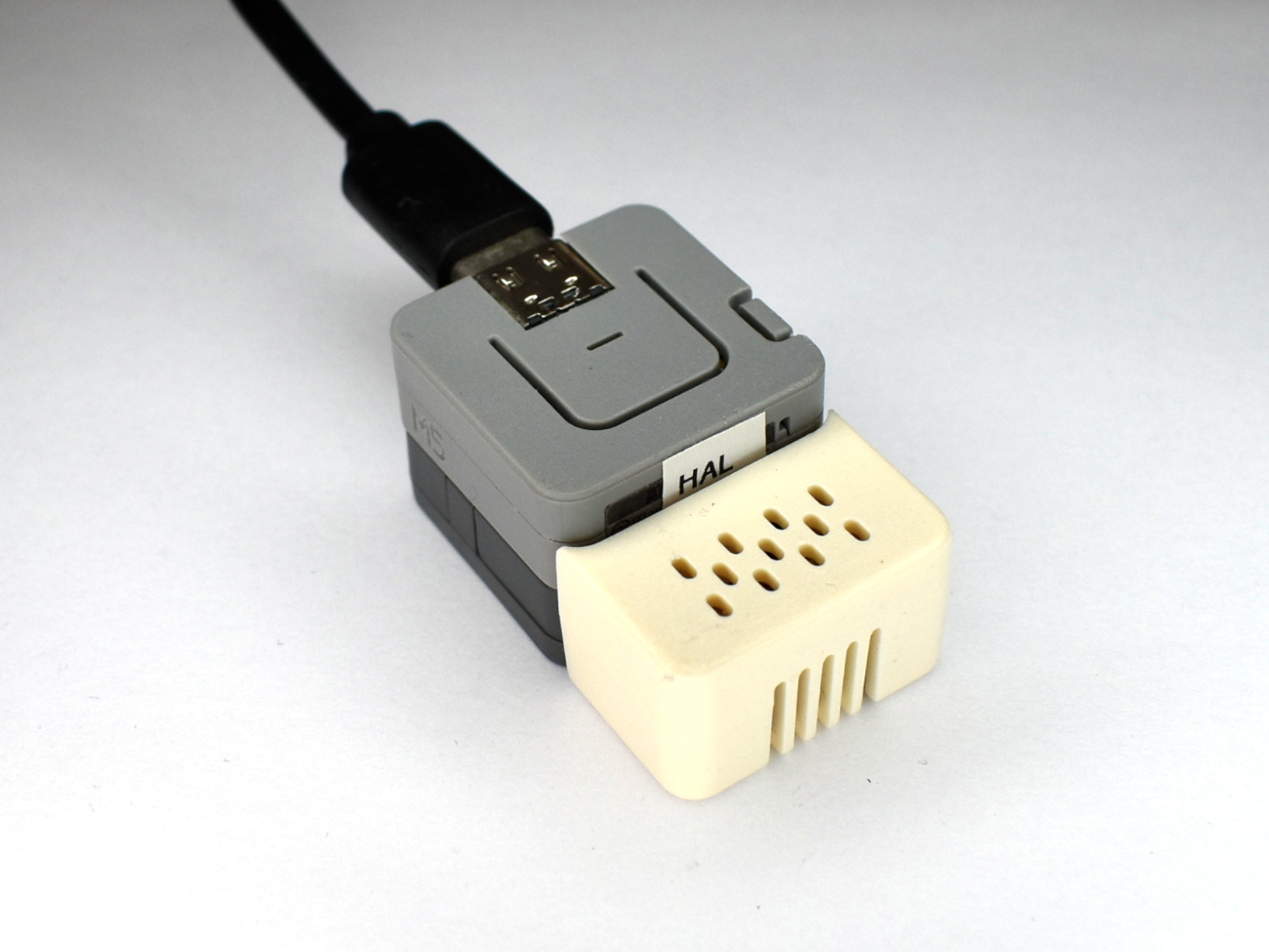
    <a class="image main"><img src="images/20240310-DSSS-and-Home-Assistant/DSC_0839xy_DSSS-Temp-Humid.jpg" alt="Sensor system by Defsystem to measure environmental temperature and humidity"/>Sensor system by Defsystem to measure environmental temperature and humidity</a>
        <p>
          This is actually our smallest system. Just measures
          temperature and humidity and stores it somewhere as JSON
          data with REST calls over HTTPS using Wi‑Fi.
        </p>
        <p>
          That somewhere could be a database system such as <a href="https://dydra.com/home">Dydra by Datagraph GmbH</a>
          and then the measurements could be visualized and analyzed
          in Observable, just as it is done for the <a href="Bottle-Fermentation-Sensor-Device.xml#DataStorageAndVisualization">sensor
          device to monitor bottle fermentation</a>. In fact, this is
          what some initial versions of this system also did for the
          last two or three years.
        </p>
        <h2>Enter Home Assistant</h2>
        <p>
          But now we added the option to use the open source home automation
          system <a href="https://www.home-assistant.io/">Home Assistant</a>.
          From the perspective of the sensor system it is not a big change, as
          Home Assistant supports a <a href="https://www.home-assistant.io/integrations/http/#sensor">HTTP Sensor</a>,
          that is dynamically created when data is sent.
        </p>
        <p>
          Technically, this is really quite similar to how we send
          data to Dydra.  It is just <a href="https://www.home-assistant.io/integrations/http/#sensor">a
          different target for the REST calls</a>, the JSON data is a
          bit different, bearer authentication with <a href="https://developers.home-assistant.io/docs/auth_api/#long-lived-access-token">long-lived
          access tokens</a> works a bit different and the actual <a href="https://developers.home-assistant.io/docs/api/rest/">REST
          API</a> is also a bit different than <a href="https://api.dydra.com/">the one of Dydra</a>. But in
          principle this is all quite the same. It is easy for us to support
          a new backend.
        </p>
        <p>But what we gain is the full power of Home Assistant!
        </p>


        <p class="clear">
          <span class="image right"><img src="images/20240310-DSSS-and-Home-Assistant/Screenshot_20240311-011554x_DSSS-home-assitant_mobile_live.png" alt="Defsystem sensor system in Dashboard of mobile app of           Home Assisten"/></span>
          <p>
            You can define dashboards to
            look at the live data and you can do that using the mobile app of
            Home Assistant:
          </p>
        </p>

        <p class="clear">
          <span class="image right"><img src="images/20240310-DSSS-and-Home-Assistant/Screenshot_20240103-130937x_DSSS-home-assistant_mobile_analysis.png" alt="Analyzing long-term data of a Defsystem sensor system in the mobile app of           Home Assisten"/></span>
          <p>
            Or you can do detailed analyses of long-term data:
          </p>
        </p>

        <p class="clear">
          <p>
            Of course, the dashboards are also available in the web site version of the Home Assistant:
          </p>
          <span class="image fit align-center"><img src="images/20240310-DSSS-and-Home-Assistant/20240620-231025x_DSSS-home-assitant_web_live.png" alt="Defsystem sensor system in Dashboard on the web site of Home Assisten"/></span>
        </p>

        <p class="clear">
          <p>
          … and data analysis may make also more sense on a bigger screen using the web site:
          </p>
          <span class="image fit align-center"><img src="images/20240310-DSSS-and-Home-Assistant/20240620-192545x_DSSS-home-assitant_web_analysis.png" alt="Analyzing long-term data of a Defsystem sensor system on the web site of           Home Assisten"/></span>
        </p>

        <h2>Extending Home Assistant and more power</h2>
        <p class="clear">
          On top of just looking, you can define alerts via the
          mobile app, via e-mail or whatever is set up. And you can define
          more complex automations than this alerting. For example, if a light
          sensor detects that it got dark you could switch on a light via an actor.
        </p>
        <p>
          We have done such things in the past but there the client supplied its own
          backend system. Now, Home Assistant can be in place of such a custom system.
          It comes with a great variety of options, integrations and add-ons, including
          a mobile app that you can use to control your system. You might still want
          a custom branded user experience in the end, but for an early prototype or
          proof of concept, this is a great option.
        </p>

    <ul class="actions special">
      <li><a href="index.xml" class="button large">Back to main page</a></li>
    </ul>
  </article>
</body>
</html>